
fogging test
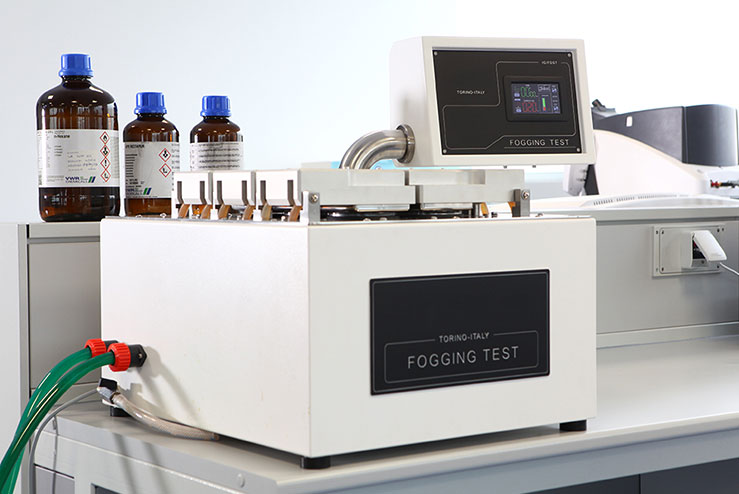
The fogging test is a procedure that measures the tendency of materials to release volatile substances when exposed to controlled temperatures. During the test, the material being examined is heated, and the vapor or volatile substances released are collected on a cold substrate. This substrate is maintained at a constant temperature to gather the condensation that forms. The fogging test is particularly used for materials such as plastics, synthetic leather, natural leather, and composite materials. These volatile substances, if released excessively, can create smudges or fogging on vehicle windows, compromising visibility and safety while driving. The test determines the extent to which these materials can release substances that may affect the transparency of vehicle windows, ensuring that the materials used inside the car do not release unwanted compounds.

FOGGING TEST: FOGGING TEST FOR AUTOMOTIVE MATERIALS – APM TORINO LABORATORY
The fogging test is a crucial procedure for ensuring the quality and safety of materials used in industries such as automotive. This test measures the tendency of materials to release volatile substances that, during use, could compromise the visibility or the internal environment of vehicles and other products. At the APM Materials Testing and Analysis Laboratory in Torino, we conduct fogging tests according to the most rigorous international standards, providing precise and reliable services to our clients.
THE IMPORTANCE OF THE FOGGING TEST IN THE AUTOMOTIVE INDUSTRY
In the automotive sector, the quality of materials is essential for ensuring safety and comfort inside the vehicle. Fogging is a phenomenon that can occur in vehicles, especially under high-temperature or humid conditions. Plastic materials, synthetic leather, and other interior materials can release volatile compounds (such as solvents, plasticizers, or other additives) that condense on the windows, reducing visibility and creating bothersome streaks.
This is why the fogging test is essential to ensure that internal components of a vehicle, such as door panels, dashboards, and other trim materials, do not release substances that could interfere with the driving experience. This test is especially critical when designing vehicles for highly regulated markets such as the European and U.S. markets.
INTERNATIONAL STANDARDS FOR THE FOGGING TEST
The APM Torino Laboratory conducts fogging tests in compliance with the major internationally recognized standards, ensuring the reliability of the results obtained:
- SAE J1756: One of the most widely used standards in the automotive industry for fogging tests, which defines the testing method for the release of volatile substances from materials used in vehicle interiors.
- ISO 6452: An international standard that establishes the requirements for performing fogging tests on materials used in the automotive industry, ensuring that components do not release substances that could compromise visibility and safety.
- ISO 17071: Another standard providing guidelines for measuring volatile contamination and determining a material’s ability to release volatile substances under controlled conditions.
- EN 14288: A European standard that specifies the procedures for conducting fogging tests on materials used in vehicles and other applications where material contamination control is necessary.
- DIN 75201: A German standard that regulates the measurement of volatile substances emitted by materials used in the automotive industry, defining the parameters for evaluating material quality and their suitability for use in vehicles.
FOGGING TEST: THE EXECUTION PROCESS
At our APM Analysis Laboratory in Torino, the fogging test is performed using highly precise equipment, adhering to the specifications of the aforementioned standards. The testing process involves the following steps:
SAMPLE PREPARATION
The material to be tested is prepared and placed inside a temperature-controlled chamber.
HEATING THE SAMPLE
The material is heated to a predetermined temperature to facilitate the release of volatile substances.
COLLECTION OF VOLATILE SUBSTANCES
The released substances are captured on a cold support through a condensation system.
ANALYSIS AND MEASUREMENT
The amount of fogging is measured and assessed based on the amount of material collected, using chemical or gravimetric methods.
TEST REPORT
At the end of the test, a detailed report is prepared, including the results and any recommendations based on the relevant standards.
Contact Us for More Information
The APM Torino Laboratory is a highly specialized facility for conducting fogging tests for the automotive industry and other industrial sectors. With our extensive experience and cutting-edge technologies, we offer precise tests that comply with the main international standards.
If you want to ensure that the materials used in your products do not release volatile contaminants and meet quality and safety requirements, the fogging test performed by our laboratory is an essential solution. Contact us for more information about our analysis and testing services, and to receive personalized advice on your specific needs. APM Torino is your ideal partner for precise fogging tests that comply with standards, ensuring the highest quality of your materials and final products.